

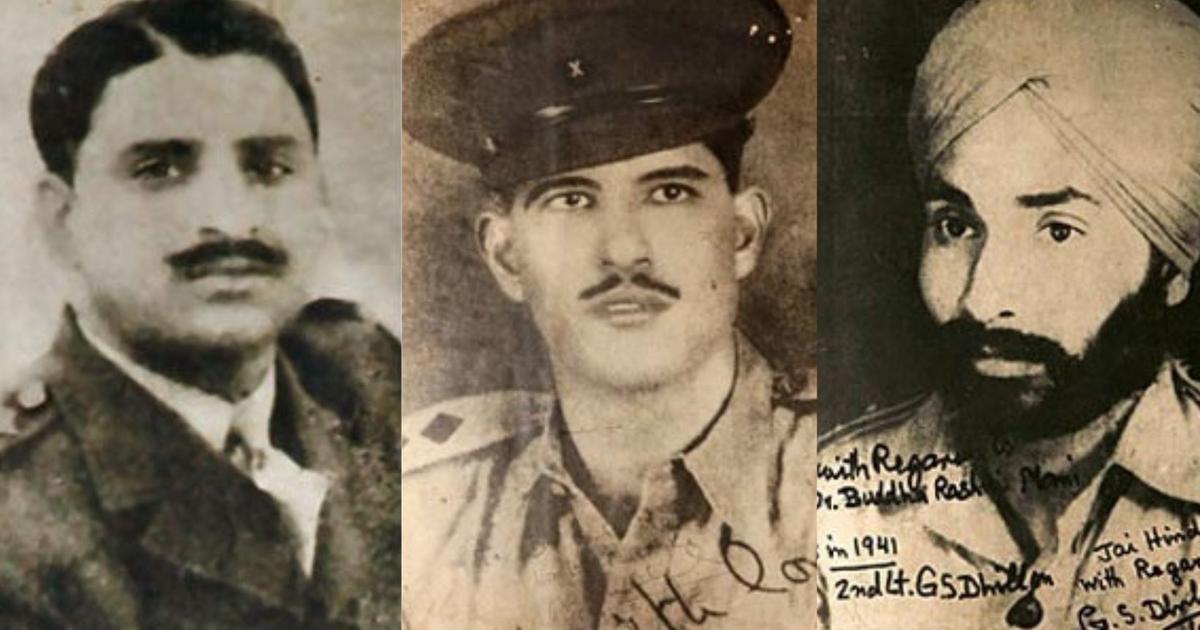
At a loss on how to revive the struggle when it was unproscribed in August 1945, the issue of the INA (Indian National Army) fortuitously fell into the Indian National Congress’s lap. The INA was vanquished in battle. Knowledge about its attempt to liberate India by force, though, had been suppressed from the Indian people by British wartime censorship. When information about the saga began pouring out after the post-war ungagging of the Indian press, the Congress adroitly seized on the resultant public anger.
The party was extended an even bigger windfall when British authorities embarked on courts-martial of defectors from the British Indian Army to the INA on charges of treachery. Indian newspapers rendered saturation coverage to a rousing performance by advocate Bhulabhai Desai as he defended three INA officers in the first of the trials.
Civic demonstrations against the trial, cutting across communal lines, turned violent, particularly in Calcutta; the Royal Indian Navy (RIN) mutinied.
The British viceroy in India, Lord Archibald Wavell, and General Sir Claude Auchinleck, commander-in-chief of the armed forces in the country, beat a hasty retreat. Under the British Indian Army Act, only a death penalty or transportation for life could be administered for treason. Eventually, no...
from Scroll.in https://scroll.in/article/1088632/when-the-court-martial-of-three-ina-officers-impacted-the-final-phase-of-indias-quest-for-freedom?utm_source=rss&utm_medium=public https://sc0.blr1.cdn.digitaloceanspaces.com/article/210533-pprxafiomf-1763454039.jpeg
via



0 Comments