

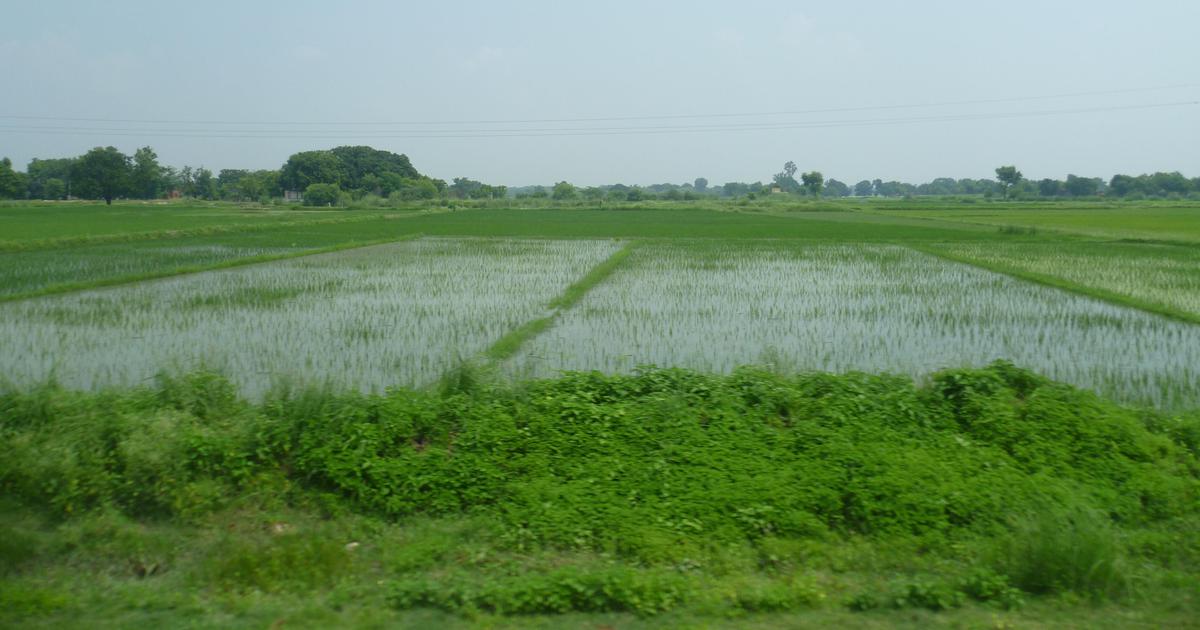
For more than a decade, Tejinder Singh Virk, a farmer in Uttarakhand’s Udham Singh Nagar district, had been planting paddy twice in the year.
First, in February, he would grow saplings in his nursery for about 25 days, before transplanting them to his 20-acre farm adjacent to it. He harvested this crop by May.
Then, around mid-June, just as the monsoon clouds began to gather over the state, he prepared for the next round of planting.
But since last year, Virk and other farmers in the district have stopped cultivating the first round of paddy – they did so after the district administration in January 2025 banned the crop’s cultivation between February 1 and April 30. This month, the administration reissued the ban for 2026.
The administration’s rationale for the ban was that the practice was draining too much water from the region’s water table. “In this dry season, the farmers depend heavily on tubewells to irrigate the crops,” the district’s collector Nitin Bhadauria told Scroll. “This has caused the groundwater levels to go down excessively, and the two paddy crops in one year are also reducing the soil productivity.”
Indeed, paddy, the region’s main crop, is highly water-intensive – of the 120 days of its cultivation, the crop needs to...
from Scroll.in https://scroll.in/article/1090119/why-an-uttarakhand-district-has-banned-paddy-farming-in-the-summer?utm_source=rss&utm_medium=public https://sc0.blr1.cdn.digitaloceanspaces.com/article/211538-bfacahyarc-1768900843.jpg
via



0 Comments