

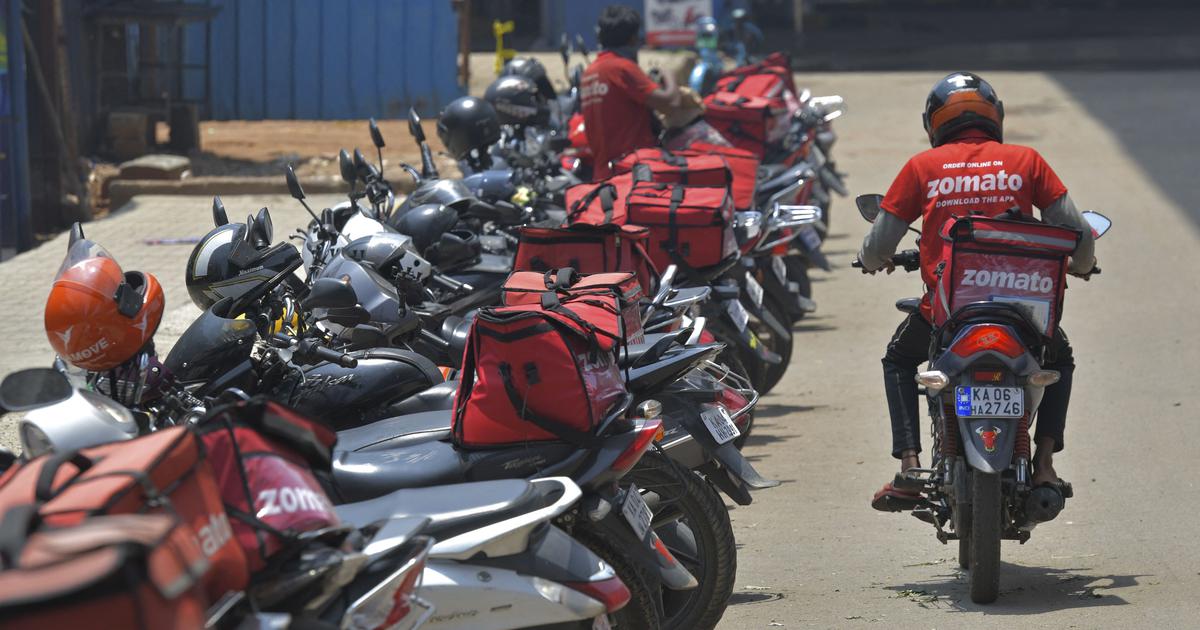
The New Year’s Eve strike on December 31 by app-based transport and delivery workers across India briefly sparked a widespread discussion on poor working conditions and the disproportionate power that platforms wield.
The strike resulted in some gains, such as the government urging quick-commerce platforms to end 10-minute delivery guarantees, but little else.
It points to a deeper limitation in India’s labour movement: an extraordinary capacity for protest, but a chronic inability to convert disruption into sustained, transferable worker power.
This is the result of India’s labour movements being held back by political alignments and the absence of shared organising methods. Similarly, platform worker unions frequently align with existing political formations, like the CPI(M)-aligned All India Gig Workers Union and the INC-linked All India Gig and Platform Workers Union, or depend on NGOs and external advocacy groups, limiting their ability to build autonomous worker power.
Gig workers, who do not have legal employee status nor the political leverage available to workers in more traditional sectors, can win better conditions only through disciplined, worker-led organising – the very capacity India’s labour movement never systematically developed.
Inherited limitations
From the first unions emerging in textile mills and railways in the late 1800s, organising was shaped by nationalist movements, social reformers and philanthropic elites rather...
from Scroll.in https://scroll.in/article/1089807/gig-worker-strike-shows-whats-holding-back-labour-organising-in-india?utm_source=rss&utm_medium=public https://sc0.blr1.cdn.digitaloceanspaces.com/article/211251-nnjhmxevvi-1767178049.jpg
via



0 Comments