

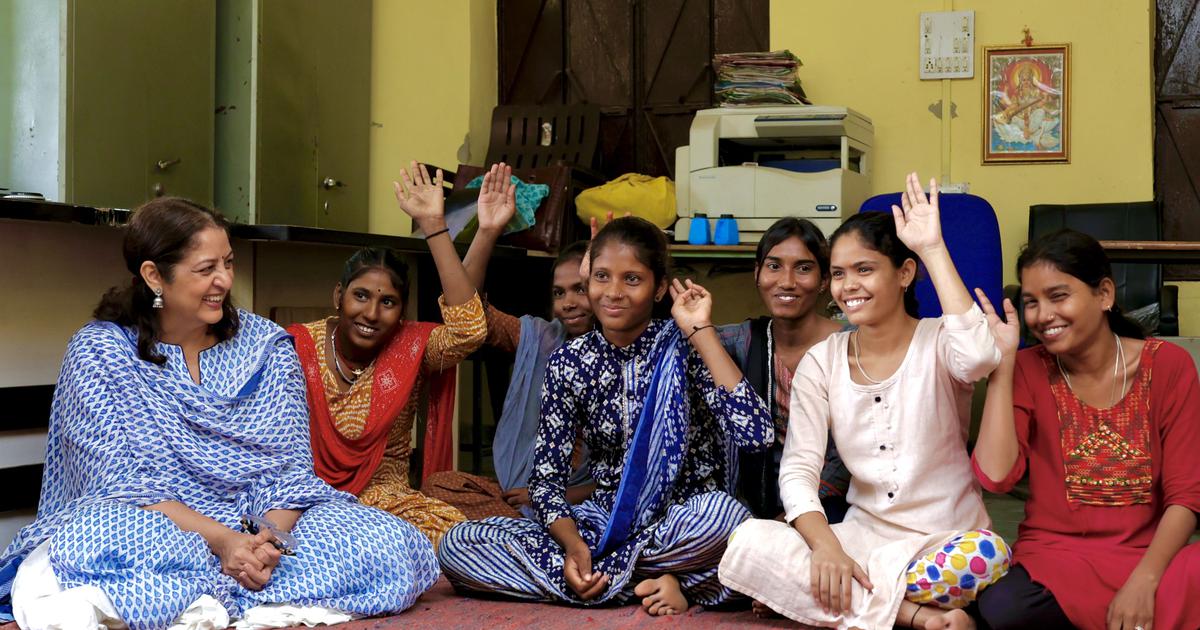
Based on research, we estimated that there were well over 7 million primary-aged girls who were missing from India’s classrooms and who should have been in school. If we wanted to make sure we weren’t going to lose another generation of girls to poverty and illiteracy, we had to act fast and identify where the problem was greatest – where did a majority of the out-of-school girls live? I wanted to use the government’s gender gap list to help me decipher where to start.
The World Economic Forum first published an annual report that looked at the gender gap in 2006 and studied four dimensions: economics, education, health and politics. It’s perhaps no coincidence then that when I first started looking for data, this is what we were talking about. And the ‘gender gap’ in education was quite simply the gap in enrolment numbers between girls and boys in primary school. Essentially, in many areas, there was a 10–20% gap between the number of girls and the number of boys going to school. And of course, the number of girls going to school was a lot lower than the number of boys.
In 2007, India was divided into around 600 districts and 26...
from Scroll.in https://scroll.in/article/1090282/how-an-education-activist-made-over-two-million-girls-return-to-school-in-more-than-30000-villages?utm_source=rss&utm_medium=public https://sc0.blr1.cdn.digitaloceanspaces.com/article/211660-uroqztircy-1769495625.jpeg
via



0 Comments