

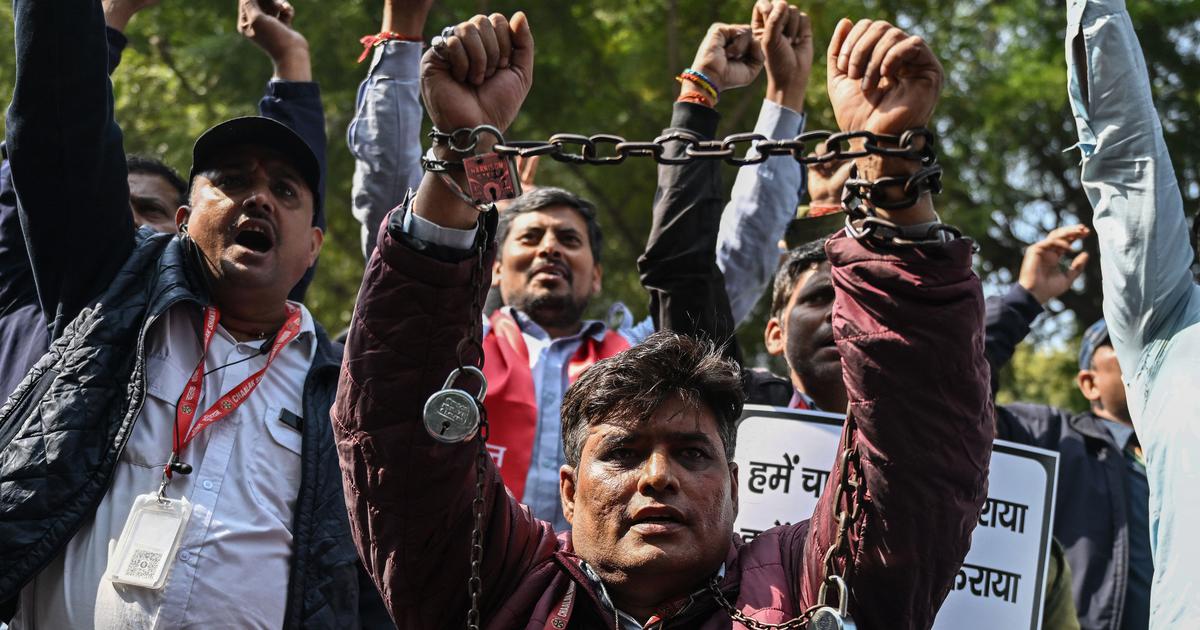
India’s gig workers on quick commerce platforms ended 2025 on a rebellious note. Over 200,000 “delivery partners”– as the poorly-paid, overworked, and precarious delivery workers ferrying food, groceries and almost everything else are euphemistically termed – called a strike on New Year’s Eve to press for fair pay, social security benefits, and safe work conditions.
It followed flash strikes by 40,000 app-based delivery workers on Christmas Day against falling incomes, excessive working hours, lack of job security, and unsafe delivery targets such as “10-minute delivery” models that put the life of the ubiquitous two-wheeler-borne delivery workers negotiating India’s congested and deadly roads at grave risk.
The New Year’s Eve strike saw some success but platforms such as Swiggy and Zomato, which aggregate restaurants, managed to blunt the effect somewhat by offering more incentives to the workers. Zomato’s founder gloated at the high sales on the day despite the strike and thanked the local authorities for keeping the “miscreants” in check. Social media and workers’ unions were aghast at this characterisation of peaceful strikers and the use of state violence to suppress union work.
The strike has triggered a debate on dignified work and capitalist greed, but these are dark days for India’s powerless labour up against a triumphant capital in India. The implications of...
from Scroll.in https://scroll.in/article/1090554/how-modi-and-his-monopolists-are-weakening-labour-power-and-indian-democracy?utm_source=rss&utm_medium=public https://sc0.blr1.cdn.digitaloceanspaces.com/article/211924-kshnbitvnq-1770815323.jpg
via



0 Comments