

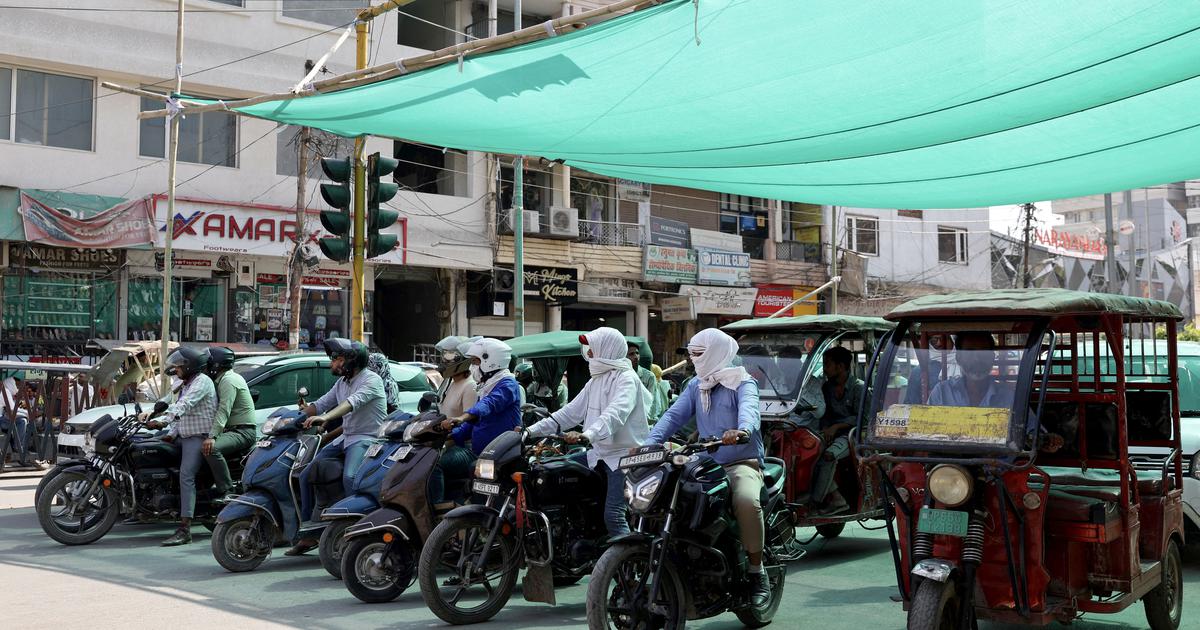
More than half the world’s population now lives in cities that are often much hotter than their rural surroundings. Roads, buildings and paved surfaces absorb and store heat during the day, then release it slowly after sunset. This is known as the urban heat island effect.
Discussions about why cities overheat tend to focus on buildings, which is understandable. As well as absorbing solar radiation, residential and office buildings consume a lot of energy through lighting, heating and air conditioning. They release waste heat, and shape the flow of air through surrounding streets.
But another source of urban heat receives much less attention: traffic.
Motorised vehicles release heat directly into the urban environment. This is especially true of petrol and diesel vehicles, where much of the fuel energy is lost as waste heat from internal combustion engines and exhaust systems. Tyres, brakes and friction with the road surface all add to these heat emissions.
In streets with heavy traffic and limited ventilation, traffic can be a significant source of human-made heat – as my recent study with colleagues of two major European cities shows.
In the southern French city of Toulouse, our modelling found that traffic heat increases the average annual air temperature by about 0.4 degrees celsius. In Manchester, a typically cooler city in the north of England, the average...
from Scroll.in https://scroll.in/article/1092985/heavy-traffic-can-make-cities-warmer-finds-study?utm_source=rss&utm_medium=public https://sc0.blr1.cdn.digitaloceanspaces.com/article/213549-hioobtosmi-1779383089.jpg
via



0 Comments