

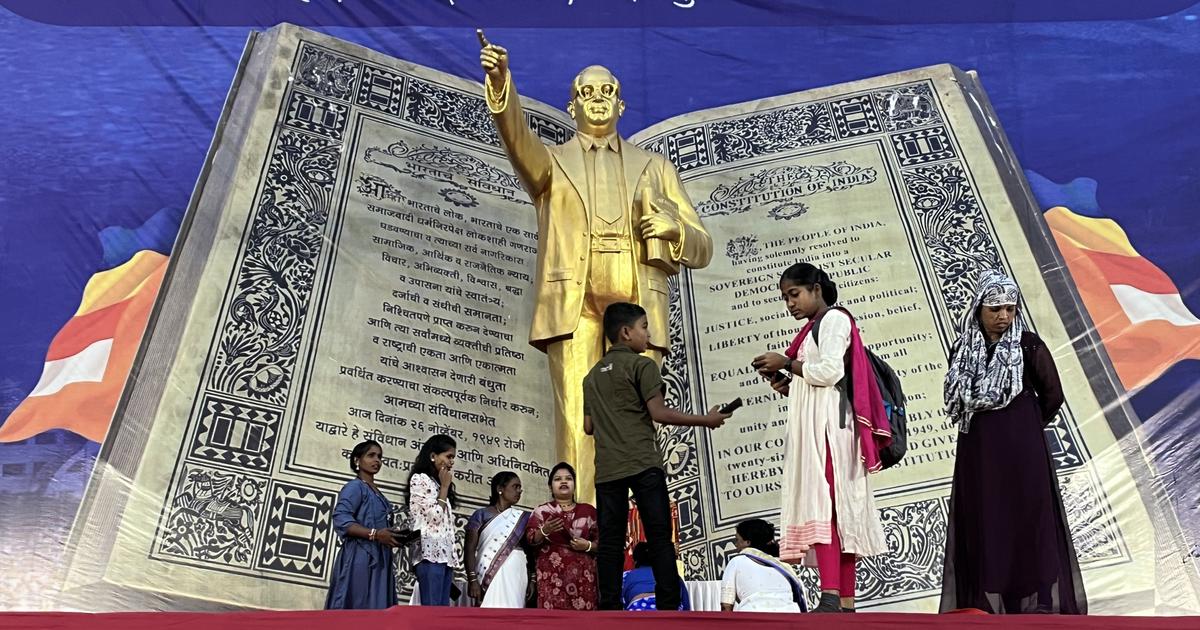
An order of the Madurai bench of the Madras High Court in G Rajesh v State of Tamil Nadu on April 30 has drawn attention for an unusual reason.
The case involved the desecration of a poster of BR Ambedkar. But instead of confining itself to the ordinary logic of criminal proceedings under the Scheduled Castes and the Scheduled Tribes (Prevention of Atrocities) Act, the court accepted a compromise between the parties, directed the accused to read Ambedkar’s writings, examined them orally on those writings and recommended the wider inclusion of Ambedkar’s ideas in school curricula.
The order, delivered by Justice L Victoria Gowri, states that the matter was approached “not merely adjudicatory, but also reformative”. Social harmony, the court observed, cannot be maintained “merely by criminal prosecution after damage is done” and the constitutional value of fraternity “cannot be left to chance”.
This is what makes the order both striking and difficult.
Moving beyond a purely punitive understanding of the law, the court attempted to open constitutional space for apology, repentance, pedagogy, and social transformation. However, when the Scheduled Castes and Scheduled Tribes (Prevention of Atrocities) Act, 1989, is already underenforced, such an approach could reinforce an already entrenched culture of impunity.
Why compromise is troubling
Offences under the Scheduled Castes...
from Scroll.in https://scroll.in/article/1093292/fraternity-and-caste-society-the-prospects-and-risks-of-a-madras-high-court-order?utm_source=rss&utm_medium=public https://sc0.blr1.cdn.digitaloceanspaces.com/article/211627-uimvonrvin-1769338017.jpeg
via



0 Comments