

Fifty years ago, India was in the midst of the Emergency. Prime Minister Indira Gandhi’s government had suspended civil liberties, censored the press and imprisoned tens of thousands of protesters.
Today, there is no formal declaration of emergency or suspension of fundamental rights under the constitution. But the parallels are hard to miss.
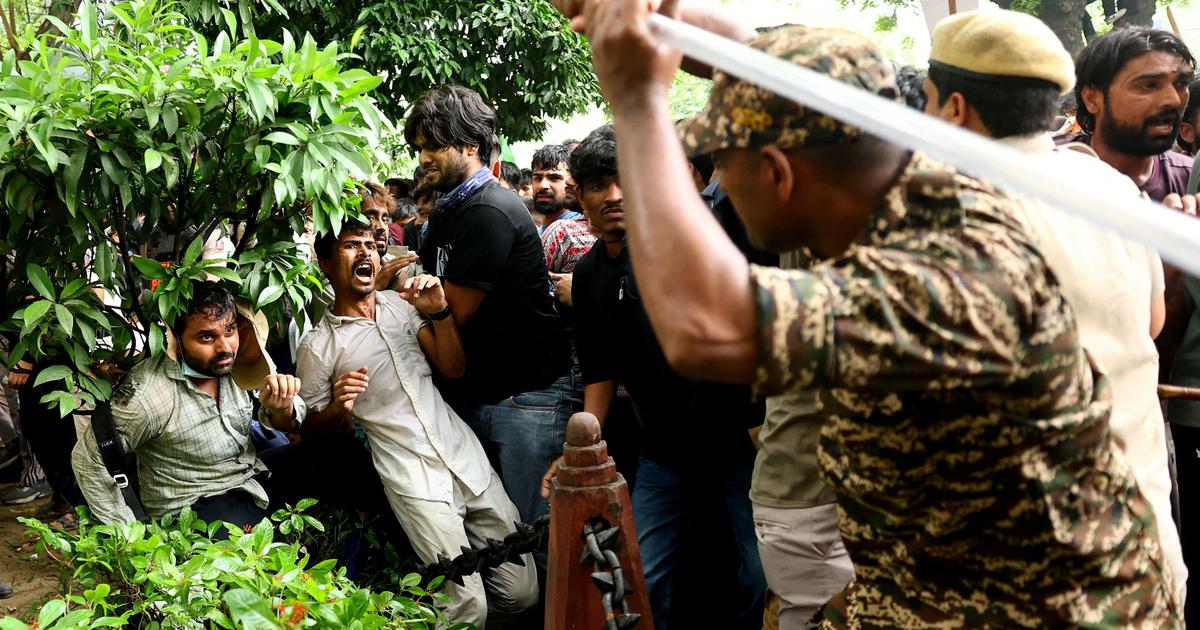
As we write this, a nationwide protest movement triggered by young people frustrated at the denial of their voices and the lack of opportunities has been met with brutal police action. A film about a human rights defender slain 30 years ago has inexplicably been taken off the streaming platform that had hosted it.
Provisions of the Foreign Contributions Regulation Act, introduced in 1976 during the Emergency, have been amended again to further tighten the state’s grip on civil society organisations that work to uncover high-level corruption, environmental degradation and human rights violations.
As during the Emergency, the state’s investigative agencies have been weaponised to go after dissidents, using the time-tested bogey of national security and fear of foreign influence to silence those not aligned with the ruling party.
Recent attacks on democratic dissent in India have not come out of nowhere. They fit a clear pattern of decline in civic freedoms under Prime Narendra Modi’s Bharatiya Janata Party government, which first came to power...
from Scroll.in https://scroll.in/article/1094613/the-emergencys-ghost-why-india-has-been-placed-on-the-watchlist-of-a-global-civil-society-network?utm_source=rss&utm_medium=public https://sc0.blr1.cdn.digitaloceanspaces.com/article/214565-qgjudselgx-1784547507.jpg
via



0 Comments