

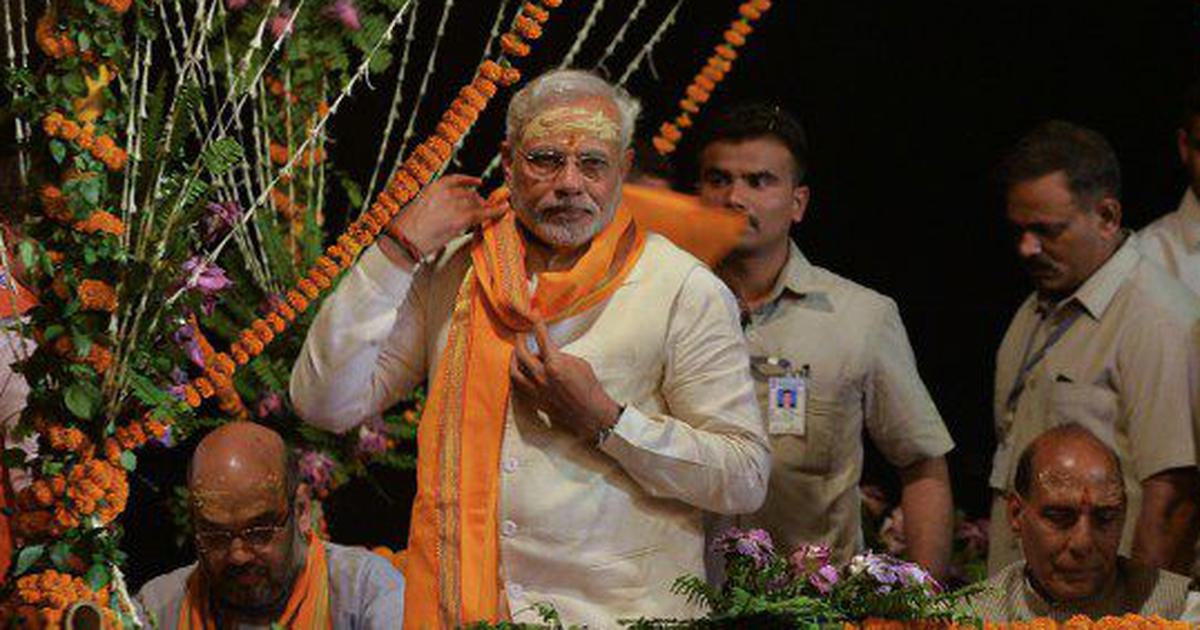
Prime Minister Narendra Modi’s newly minted phrase dimagi Naxal – “intellectual Naxal” – is meant to designate an ideological enemy: people whose ideas supposedly endanger the nation by questioning its political direction.
In his Independence Day address this year, Modi warned that although armed Naxalism was nearing its end, its ideological adherents are still a threat. Critics immediately pointed out the phrase’s obvious affinity with the government’s earlier use of the phrase “urban Naxal” to stigmatise academics, activists, intellectuals, and other dissenting voices.
There is, however, an unintended irony in this language. If dimagi Naxal is to mean someone who questions authority, then some of the earliest and most formidable dimagi Naxals in India were the sages who composed the Vedas and Upanishads – texts that the Hindutva brigade claims as the philosophical wellspring of their ideology.
Just last year, at an event in Ahmedabad, Home Minister Amit Shah shared his post-retirement plans: to study the Vedas and the Upanishads. While this interest in India’s ancient texts may appear commendable, a closer look at Vedic literature reveals a complex, pluralistic, and heterodox tradition that is fundamentally at odds with the ideology that Shah and his associates champion.
The regular appeal to the Vedic tradition by the Bharatiya Janata Party and...
from Scroll.in https://scroll.in/article/1095321/dimagi-naxals-the-sages-of-the-vedas-and-the-upanishads-would-qualify-today?utm_source=rss&utm_medium=public https://d1u4oo4rb13yy8.cloudfront.net/article/17637068765_4594558dce_o.jpg
via



0 Comments