

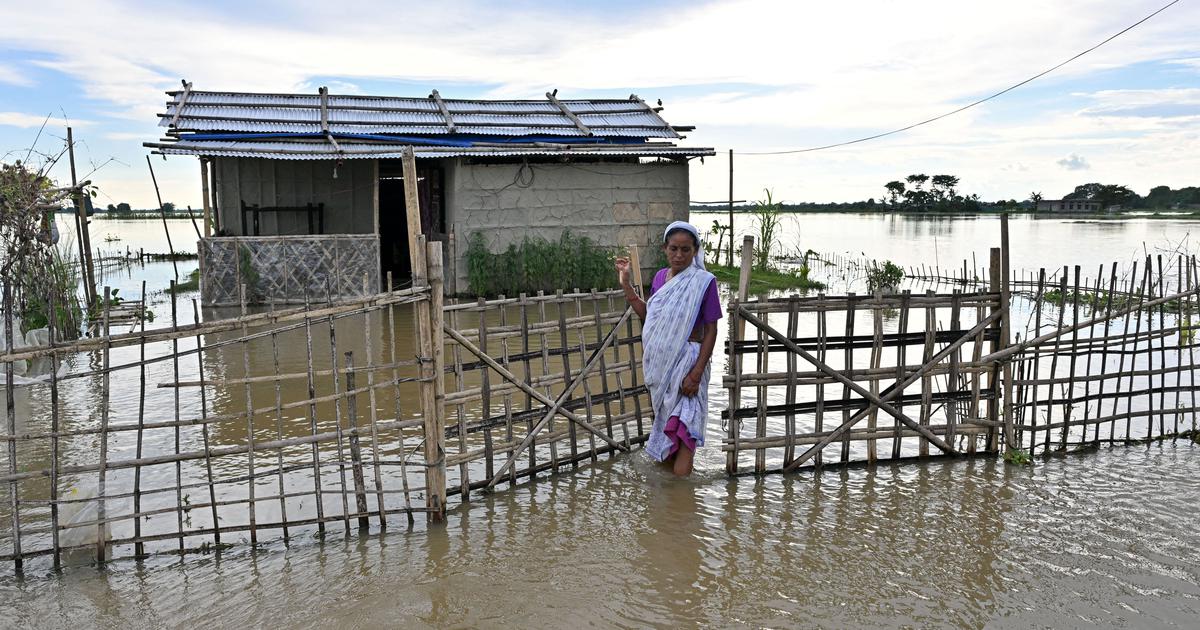
Since July 19, an artificial flood has wreaked havoc in four Upper Assam districts. So catastrophic has this flood been that nearly 800 villages and an area of around 1,19,000 hectares of cropland have been submerged, sheets of mud have been deposited in fields and inside people’s homes and large areas in the countryside have been turned into lakes.
More than 100 people have died and roughly seven lakh have been affected. Countless cattle have died.
The worst part of this disaster is that these are places not on the map of Assam’s annual flooding. But now, they seem to be doomed, as if a malignant wound has been created that will only spread and not heal.
For a land that is shaped and reshaped by the Brahmaputra river system and its unique fluvial dynamics, floods are not new in Assam – nor unwanted. Every monsoon, floodwaters bring alive all that was parched and dormant, replenishing the wetlands and the paddy fields, and reassuring fecundity in all living beings.
Assamese society has been traditionally a flood-dependent society, not a flood-fearing or flood-resisting one.
To make sense of the current catastrophe in Upper Assam, a historical understanding of how a natural phenomenon has become disastrous in the Brahmaputra Valley is necessary.
from Scroll.in https://scroll.in/article/1095046/upper-assams-flood-catastrophe-is-a-direct-result-of-river-and-mountain-grabbing?utm_source=rss&utm_medium=public https://sc0.blr1.cdn.digitaloceanspaces.com/article/215056-dfeydwvlto-1786722531.jpg
via



0 Comments