

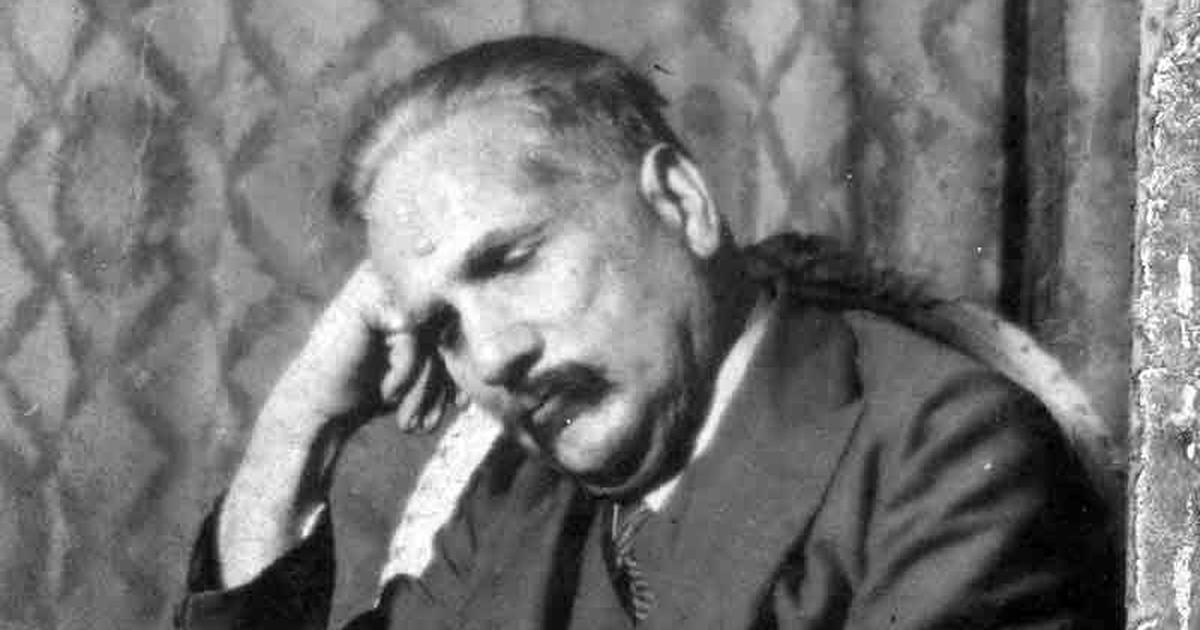
Raza Mir’s introduction to Mohammad Iqbal’s poetry and philosophical work, along with some biographical reflection in Iqbal: Poet of the East, provides extensive knowledge to the beginner who wants to read Iqbal’s philosophical work regarding the concepts of Khudhi, Shaheen and Socialism. The introductory book also familiarises readers with the intricate threads of Iqbal’s engagement with socialist thinkers such as Karl Marx and Vladimir Lenin. Yet, beyond a limited intellectual circle, many continue to reduce Iqbal to selective ideological readings, overlooking his poetic invocations of Hindu deities and civilisational hymns.
Mohammad Iqbal has been almost imprisoned in the image of a flamboyant poet of Saare Jahaan Se Acha or as an ideologue of Pakistan, conceiving him as a political and religious figure while ignoring his body of philosophical work. However, he participated actively in the pre-independent Indian politics, offered his opinion on partition, and wrote several patriotic pieces in Urdu, including Tarana-e-Hindi. Ironically, Iqbal is one of the most quoted and least read figures of the subcontinent, which has created a fragmented image of the poet-philosopher. Nationalists invoke him selectively, Islamists claim him exclusively, while secular critics often dismiss him. Such selective appropriations have reduced a restless intellectual to an ideological emblem.
Iqbal, born on November 9, 1877, in Sialkot,...
from Scroll.in https://scroll.in/article/1093965/why-the-philosophical-conversations-in-mohammad-iqbals-poetry-are-relevant-to-modern-political-life?utm_source=rss&utm_medium=public https://sc0.blr1.cdn.digitaloceanspaces.com/article/214251-njocrbvicv-1782886809.jpg
via



0 Comments