

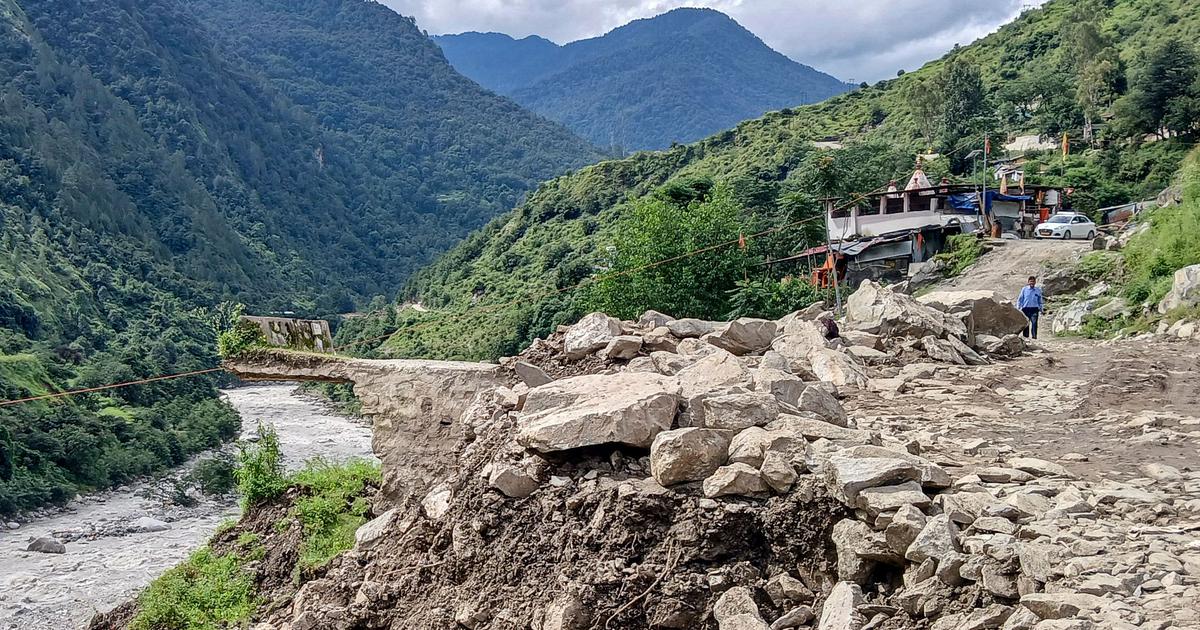
Long before Instagram discovered the “mountain aesthetic”, writers and painters had turned the Himalaya and its connected ranges into screens for every possible longing. James Hilton’s Lost Horizon condensed central and eastern Himalayan motifs into Shangri-La, a timeless sanctuary of moderation and wisdom somewhere beyond the ordinary world.
Nicholas Roerich marched through Kashmir, Ladakh and Central Asia in the 1920s, chasing legends of Shambhala and painting a long series of canvases full of cobalt ridges, luminous snows and monasteries perched like punctuation marks on cliffs. Admirers sometimes say he left hidden clues in these canvases; one suspects the mountains, if asked, would shrug and point out that the most obvious clue is the geology in the background, which everyone compliments and almost no one reads.
Eventually Roerich settled in Naggar in Kullu Valley, building a house that looks modest until you glimpse the views from its verandah. From there he continued to paint the ranges that had once been rumoured as a hidden kingdom, now treated as both subject and neighbour. Between his canvases, his role in early cultural-protection treaties, and the ongoing activity at the Urusvati Himalayan Research Institute, Roerich helped crystallise a vocabulary of Himalayan sacredness that still colours everything...
from Scroll.in https://scroll.in/article/1096581/how-the-mismatch-between-climate-change-and-touristic-aspirations-is-harming-the-himalayas?utm_source=rss&utm_medium=public https://sc0.blr1.cdn.digitaloceanspaces.com/article/208855-pndshsbuix-1755441758.jpg
via



0 Comments