

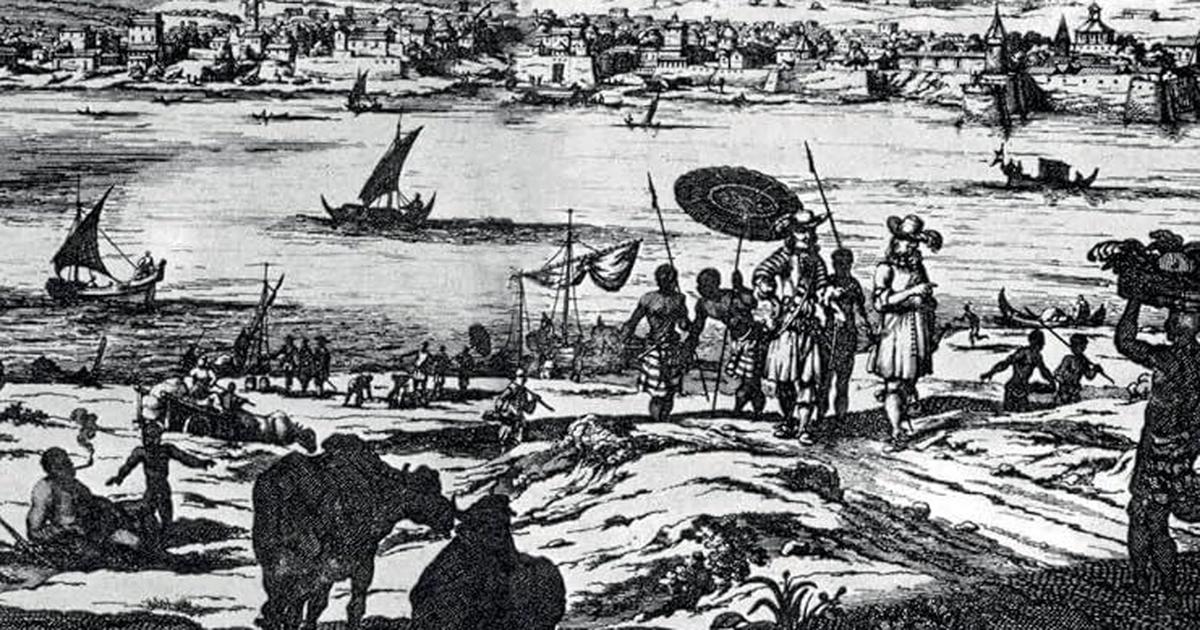
Major maritime merchant communities from the subcontinent transcended religious, regional and caste identities. In the existing literature, they are often identified along these lines, yet such classifications do not fully capture the fluid and interconnected nature of their networks, as in the case of Banias, which included Buddhists and Jains earlier, but also Hindus and even Muslims later. The same goes with Lohanas as well as Klings and Chulias, all who crossed the borders of religions as much as of the regions. It would be impossible to enlist and analyse all mercantile groups from the subcontinent here, but below I provide snapshots of a few major transoceanic communities active between the 11th and 16th centuries.
Until the end of the first millennium in the subcontinent, Buddhist and Jain traders played a major role in the oceanic world, often mirroring their influence in overland commerce. The boundaries between these groups in the maritime mercantile contexts were blurry, but we do see occasional references for them competing for economic and political influence.
For instance, in the Maitraka kingdom of Vallabhi in Gujarat, Jain and Buddhist merchants were in fiercest competition. The major competitors of the Jain traders of Vallabhi were the Buddhist merchants from Bharuch...
from Scroll.in https://scroll.in/article/1095897/maritime-history-how-merchants-transcended-caste-and-faith-identity-to-rule-over-sea-trade?utm_source=rss&utm_medium=public https://sc0.blr1.cdn.digitaloceanspaces.com/article/215669-ccjmfqphxl-1789984361.jpg
via



0 Comments